Same categories
Men use the same oval, round, square, oblong, diamond, heart, and triangle categories as the general detector.
Face shape guide for men
Separate the underlying outline from beard edges, hairline changes, and haircut volume. Compare the seven supported categories, then use a controlled photo when two patterns remain close.
Male face map
Seven face-shape categories
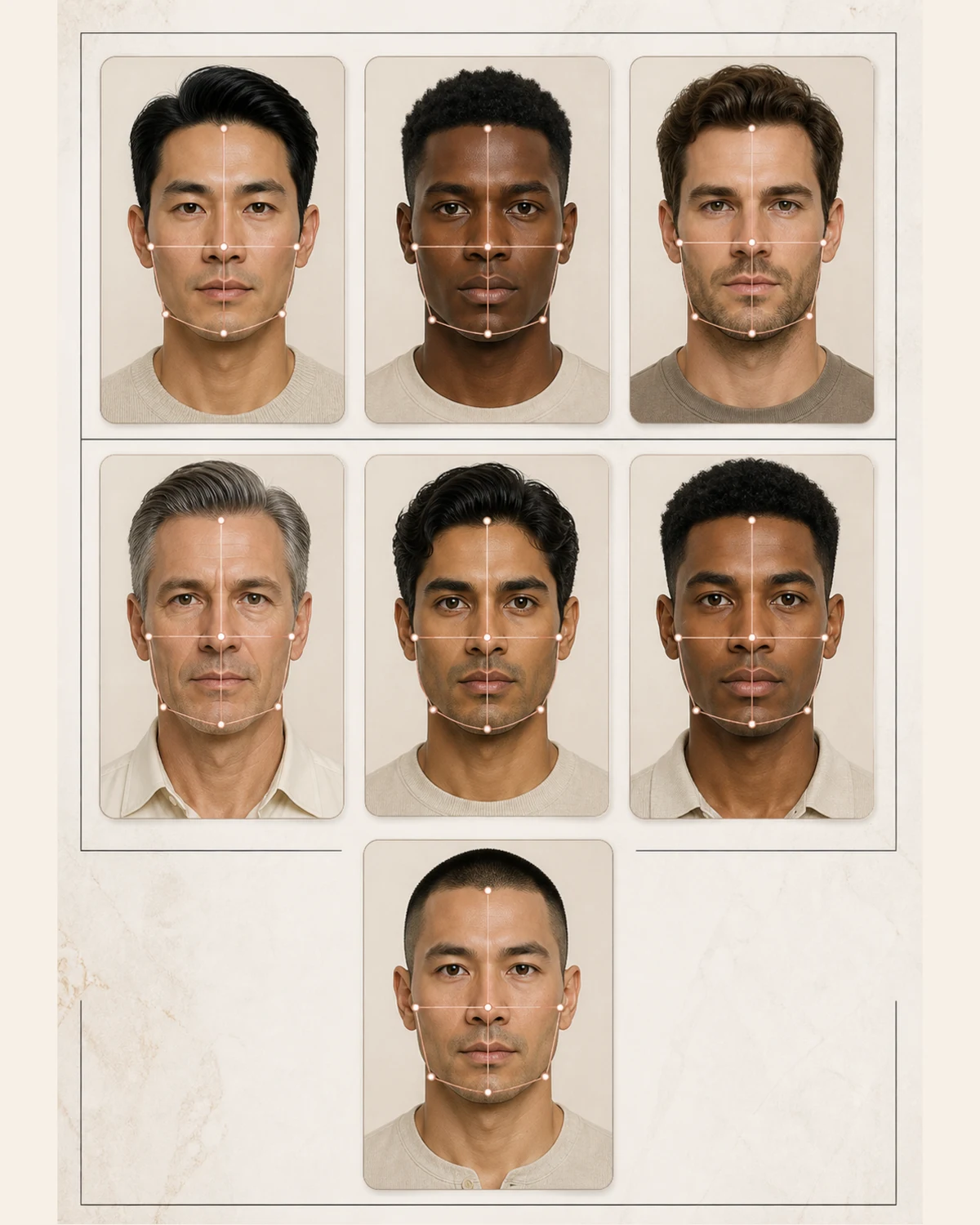
Output
Cues and next step
Start with structure
Jaw width, cheekbone width, forehead width, face length, and chin taper determine the closest category. Grooming can change the visible silhouette, so establish those proportions before judging style effects.
Men use the same oval, round, square, oblong, diamond, heart, and triangle categories as the general detector.
On men's faces, the jawline, cheekbone width, brow area, and hairline often decide which shape reads strongest at first glance.
If two shapes look close, use a front-facing photo in the detector and compare the result with the measurement cues below.
Shape types
Start with the widest area of the face, then compare face length with cheekbone and jaw width. The notes below explain how each shape usually reads on a man's face.
Balanced width with extra length
An oval male face looks balanced rather than sharp. The face is a little longer than wide, and the jaw does not dominate the cheekbones.
Similar length and width
A round male face has softer cheek and jaw transitions. It may look shorter or fuller when the face length and width are close.
Even widths with a strong jaw
A square male face is defined by similar forehead, cheekbone, and jaw widths, with a lower face that looks broad and structured.
Noticeably longer than wide
An oblong or rectangle-like male face is noticeably longer than wide. The sides look straighter, and width stays fairly even from forehead to jaw.
Cheekbones are the widest point
A diamond male face is widest through the cheekbones. The forehead and jaw look narrower, so the midface becomes the strongest feature.
Broad upper face, narrow chin
A heart male face has more width in the upper face and a narrower chin. The hairline and forehead can make this shape easier to spot.
Jaw wider than forehead
A triangle male face builds width toward the jaw. The lower face looks broader than the forehead, especially from a front-facing view.
Manual checks
Use these checks when you want a manual answer before or after running the detector.
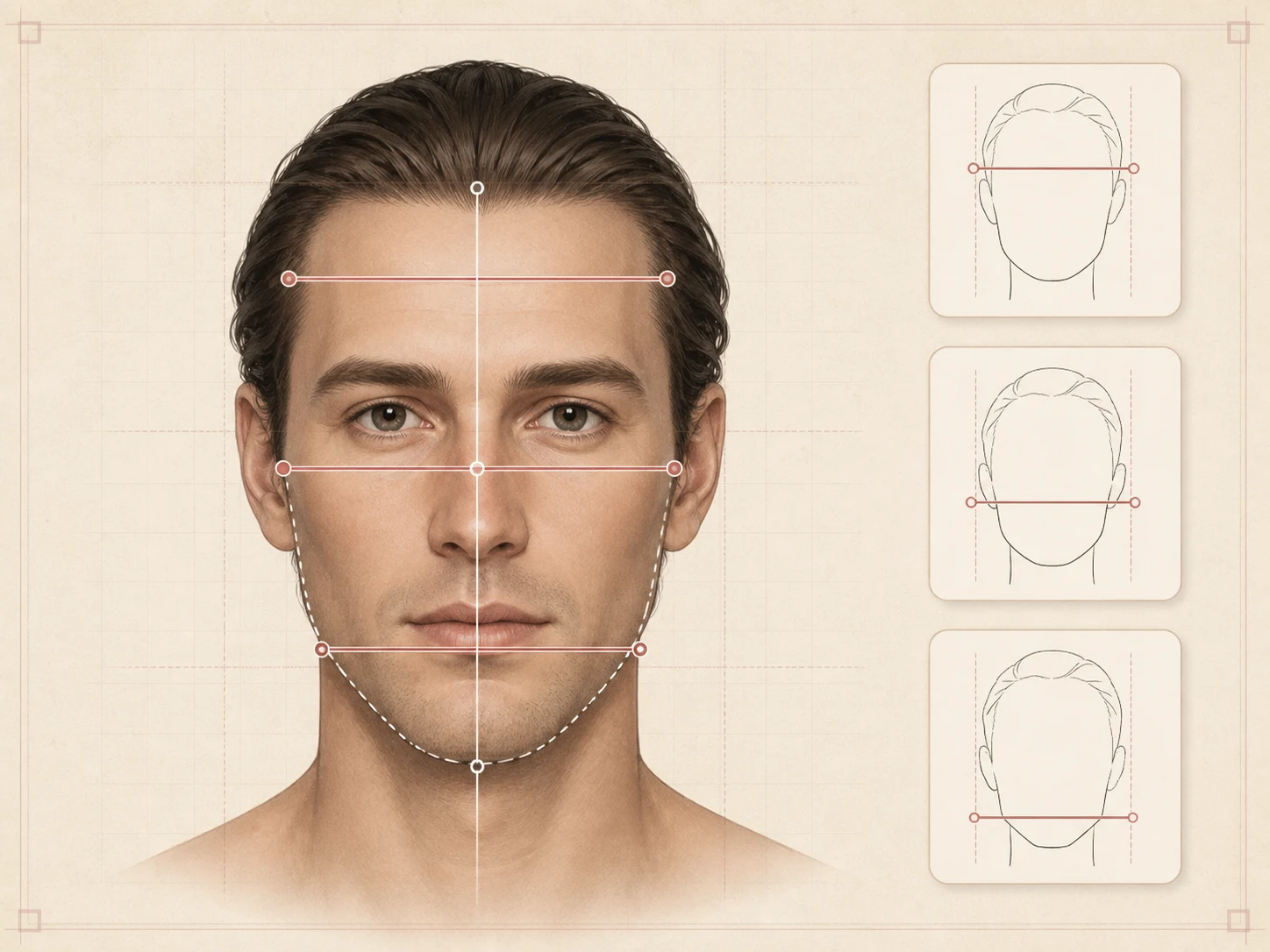
Outline controls
Use one controlled, front-facing reference photo as the baseline. The goal is not to remove personal style; it is to keep beard and haircut geometry from replacing the anatomical checkpoints used for classification.
A full beard can widen the jaw, lengthen the chin, or turn a rounded lower face into a square silhouette. Find the jaw corners and chin beneath the hair, compare an older clean-shaven photo when available, and mark the visible beard outline separately from the estimated facial outline.
Short stubble reveals structure better than a full beard, but a clenched jaw can still create temporary width and sharper corners. Keep the lips gently closed, teeth apart, and expression neutral; compare both sides instead of judging the stronger side only.
A fade, quiff, fringe, or receding hairline changes perceived face length. Measure to a repeatable upper-forehead reference when the natural hairline is irregular, and ignore added hair height. State that reference if you compare measurements taken on different days.
If cheekbones are slightly wider than the forehead, the bare jaw narrows gradually, and face length is moderate, the base pattern may be oval. A box-shaped beard can make the jaw look equal to the cheeks. Use the underlying jaw landmarks for identification, then treat the beard outline as a separate styling choice.
Measurement context
The detector reads facial landmarks and proportions, not masculinity or a grooming preference. Hairline, jawline visibility, and beard outline matter only when they obscure the underlying checkpoints.
Face length, forehead width, cheekbone width, jaw width, and chin taper are still the core inputs.
For men, facial hair and shorter haircut shapes can strongly change the perceived lower face, so the guide separates identification from styling choices.
After identification
Confirm the underlying proportions first. Then use haircuts, beard shaping, and eyewear to adjust visual height, width, or angularity without treating any option as a rule.
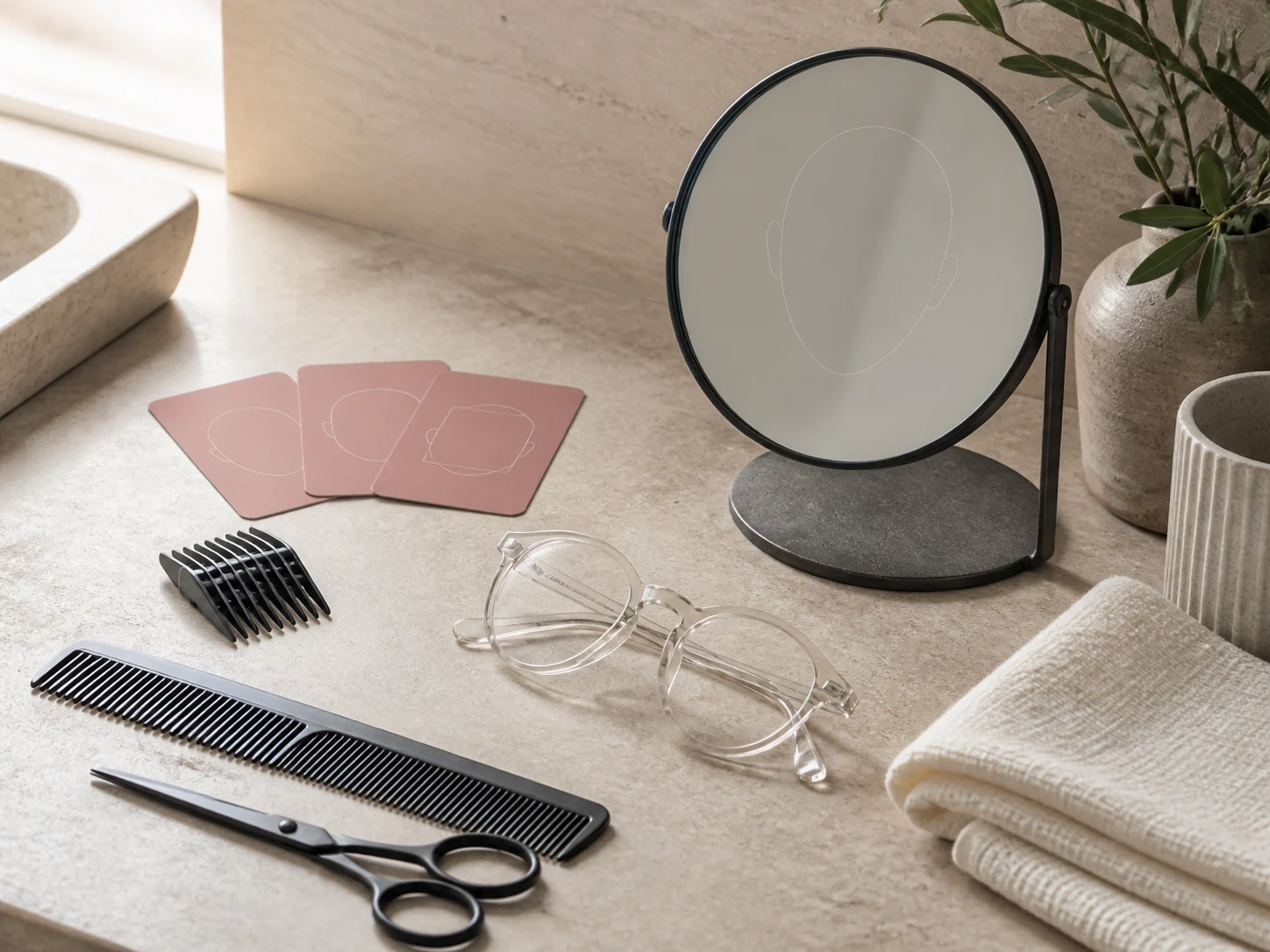
Hair can add height, reduce side width, or soften strong lines depending on the shape.
Facial hair can visually extend the chin, sharpen the jaw, or add width to a narrow lower face.
Glasses can add angles, soften corners, or balance a wider forehead or jaw.
Internal links
Use the detector for a photo-based result, or compare all seven supported categories in the main face-shapes guide.
FAQ
Practical answers about measurement, beard effects, category boundaries, and photo confirmation.
Ready to confirm it?
Use this guide for context, then upload a clear front-facing selfie on the detector page to check the closest face-shape category.