Face length
Measure from the center of your hairline to the lowest point of your chin.
Hairline to chin
Upload a selfie and find your face shape in seconds. Your photo stays private in your browser, and you will receive proportion cues and styling starting points based on your facial measurements.
100% private - your photo never leaves your browser.
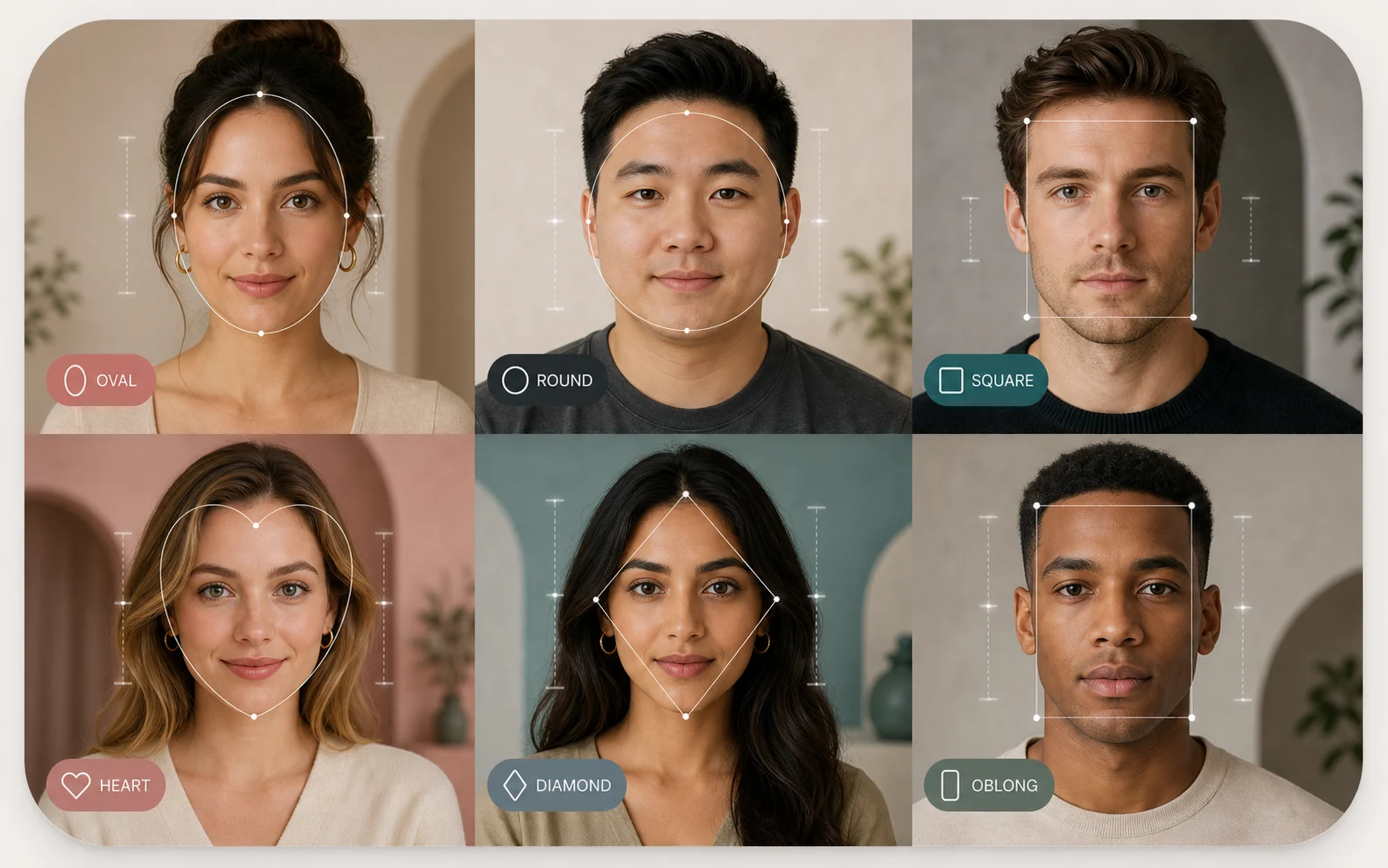
Upload a clear front-facing selfie. We detect your facial proportions and turn them into a face-shape result with style starting points.
Example output
Oval face
Key measurements
Recommended
For best results:
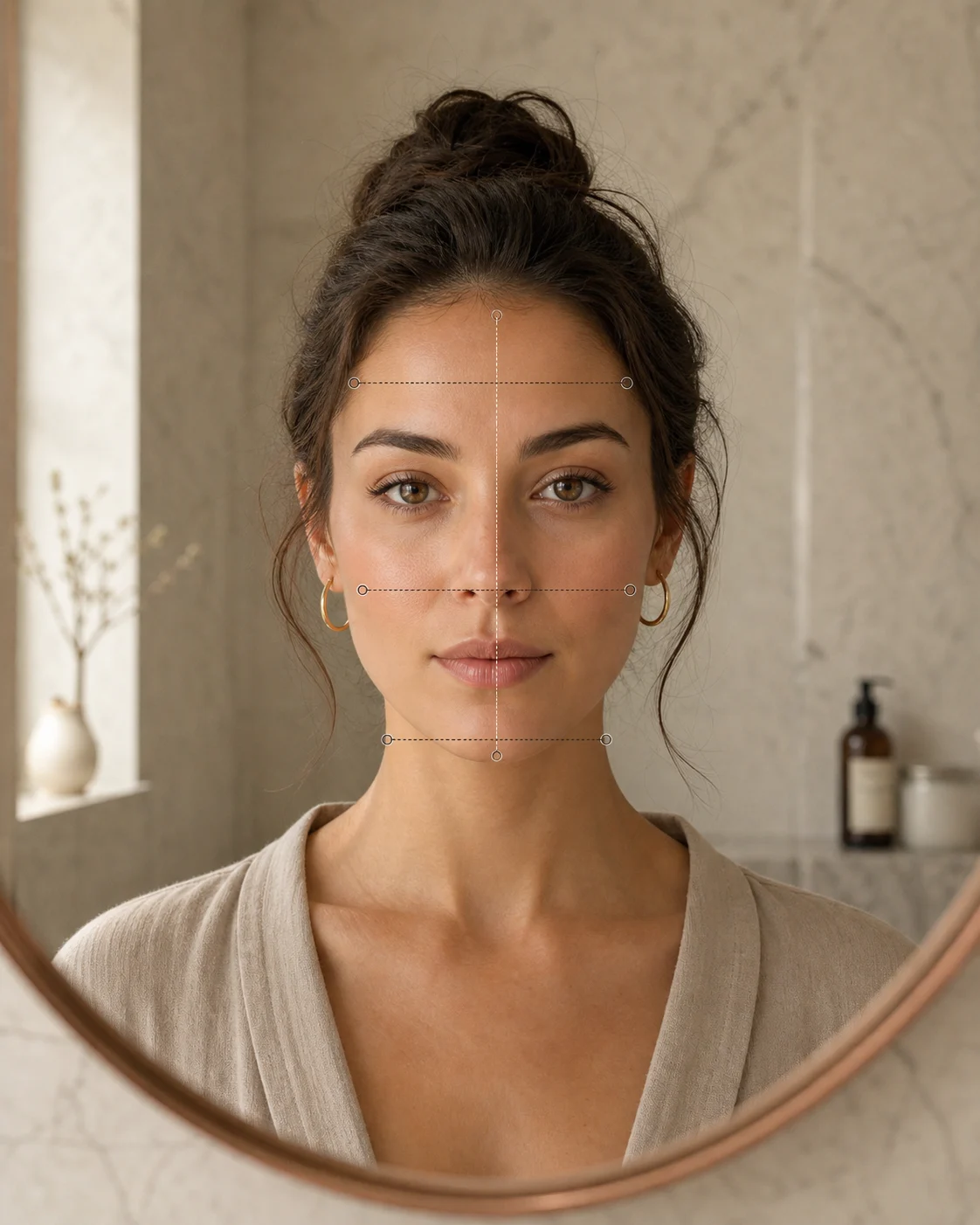
After the photo preview, use four quick checks to confirm the face-shape classification and see which areas are widest.
Measure from the center of your hairline to the lowest point of your chin.
Hairline to chin
Measure across the widest part of your forehead, usually between the temple peaks.
Temple to temple
Measure across the most prominent point of each cheekbone below the outer eye corners.
Widest cheek points
Measure from the chin tip to one jaw corner, then double that number.
Chin to jaw corner, doubled
Look at the relationship between all four values. Similar widths suggest different shapes than one clearly dominant forehead, cheekbone, or jaw measurement.
Go from selfie upload to detected face shape preview, then verify the category with proportion cues.
Use a centered, front-facing portrait with neutral expression and visible facial edges.
Generate a quick preview of the face shape category to investigate more closely.
Use the category traits and proportion checks to confirm the best-fit result.
Start from one selfie and get a detected face shape in the browser.
The page checks facial landmarks and ratios instead of returning a random label.
Compare oval, round, square, heart, oblong, diamond, and triangle results.
Use the detected category as a starting point, then check forehead, cheekbone, jawline, and face length.
Most faces combine traits from more than one category. Focus on overall proportion, the widest area, and the contour from temples to chin.
Balanced width with extra length
An oval face is gently longer than it is wide, with smooth transitions through the forehead, cheekbones, and jaw.
Read the Oval guideBrowse every supported guide from one place: compare all face shapes, check a result by hand, study close matches, or open a dedicated type page.
Compare the full face-shape taxonomy before choosing a specific oval, round, square, heart, oblong, diamond, or triangle guide.
View face shapesUse face length, forehead, cheekbone, jawline, and chin cues to check the detector result by hand.
Measure your shapeReview selected, source-checked editorial examples while keeping photo angle and mixed traits in context.
View celebrity examplesUse focused measurement guides when two neighboring categories remain plausible.
Oblong vs ovalCompare vertical length, side lines, and the amount of taper toward the jaw.Oval vs roundCheck whether moderate length and gradual taper are strong enough to move beyond round.Control for styling cues that can hide the outline before comparing the same proportion evidence.
Face shapes for menAccount for facial hair, hairline visibility, and jaw emphasis without changing the classification rules.Face shapes for womenSeparate hair, makeup, and pose effects from the measured facial outline.Once the detector gives a best-fit category, use it as a starting point for hair, glasses, contour, and facial-hair choices.
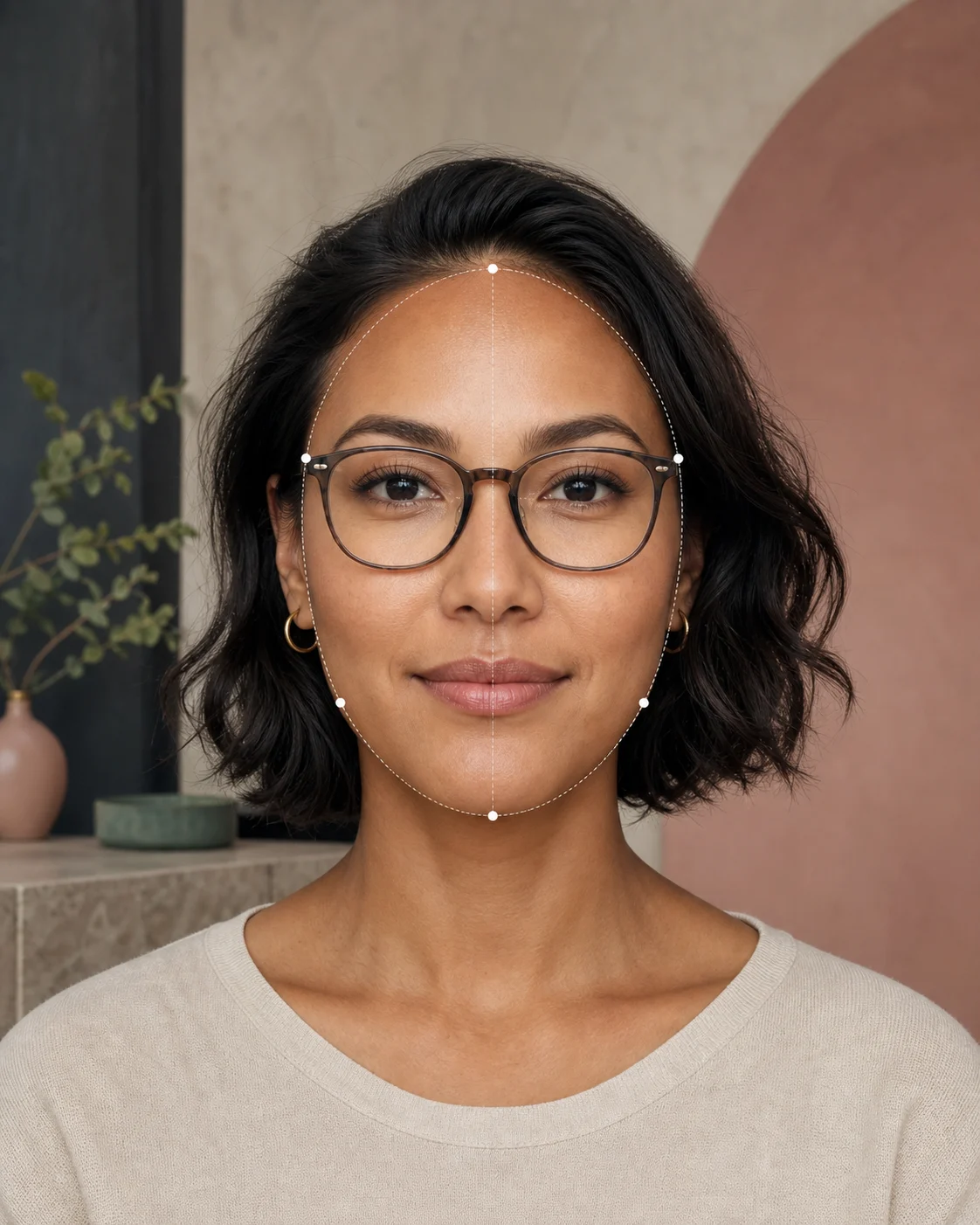
Find clear answers to common questions about photo requirements, analysis accuracy, privacy protection, and how to interpret your face shape results.
Upload a sharp, straight-on selfie with the full outline visible. The detector uses the same photo workflow whether you are starting from a mirror guess, a manual measurement, or no prior idea.
No. The analysis and measurement logic run in your browser. The selected photo is not sent to an application upload endpoint.
It uses local face landmark analysis and deterministic proportion scoring. Compared with generic AI face shape detectors and broad face shape AI tools, it explains the visible ratios it used, but it is not a biometric identity system.
The result is a best-fit category. If you are asking "what type of face shape do I have," compare the detected face shape with nearby types instead of forcing one label.
Mixed traits are common. When you wonder "what face shape is this," focus on the widest area, face length, and jaw contour to choose the closest match.
The preview is based on visible proportion cues. Think of it as a face shape identifier and face shape meter for style decisions, not as a medical or biometric result.
Yes. Facial proportions and landmark analysis work identically for men and women, though grooming choices such as beards or hairline shape can visually shift perceived jawline and forehead boundaries.
You can still check face length, forehead width, cheekbone width, and jawline width, then compare those measurements with the detector categories.
Upload a clear photo, preview your detected face shape, then verify the result with proportion cues.