Same categories
The available outcomes are oval, round, square, oblong, diamond, heart, and triangle. Gender does not create a different geometry or a separate set of outputs.
Face shape guide for women
Begin with an unfiltered portrait and uncover the temples, cheeks, jaw, and chin. Once that reference is stable, distinguish the seven available categories and note the runner-up when the proportions sit between two patterns.
Women's face map
Seven face-shape categories
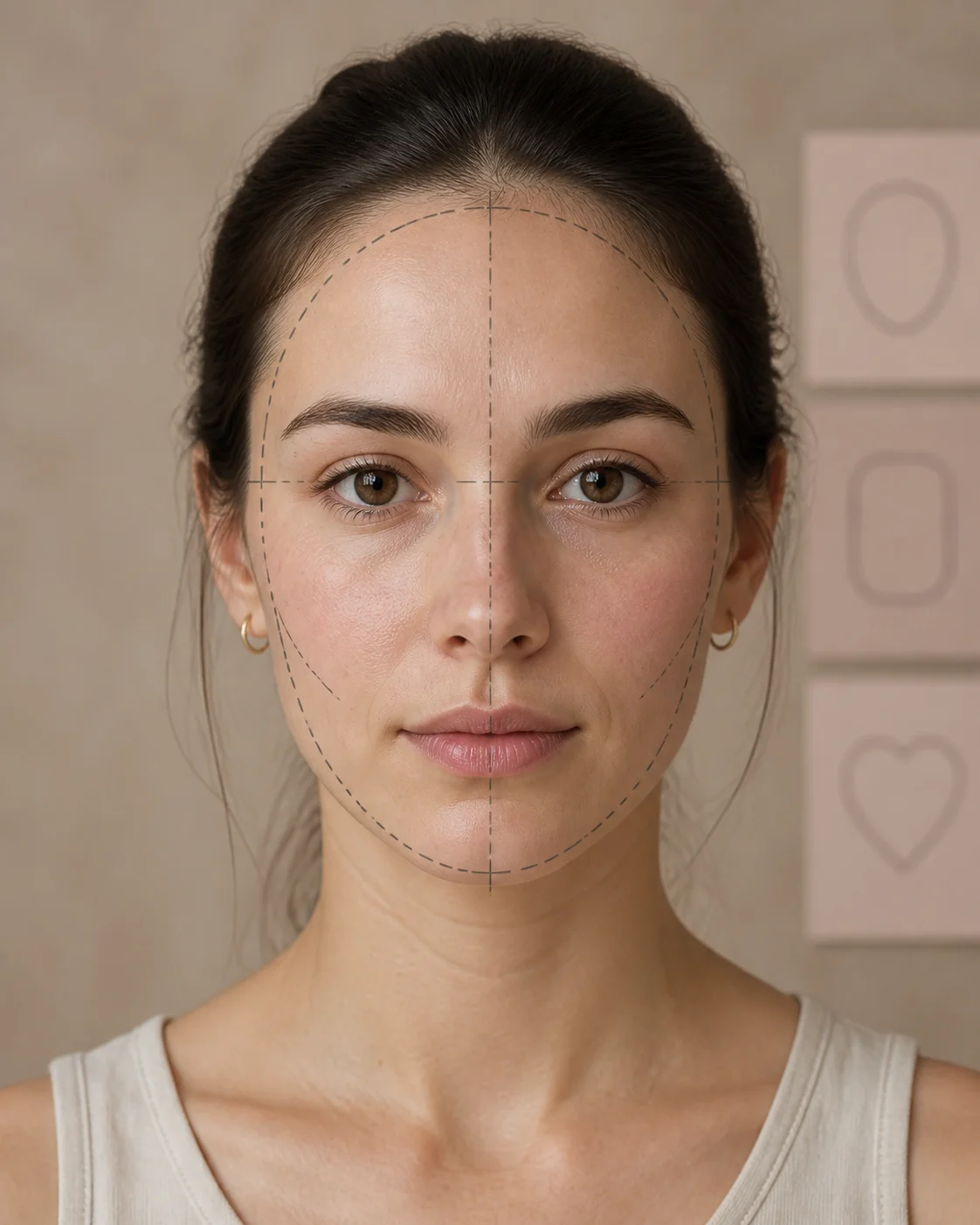
Output
Cues and next step
Start with structure
Build a baseline from five checkpoints: vertical length, upper-face span, cheek span, lower-face span, and the way the chin finishes. Evaluate styling only after an uncovered reference shows which relationship is stable.
The available outcomes are oval, round, square, oblong, diamond, heart, and triangle. Gender does not create a different geometry or a separate set of outputs.
Hair length, layers, glasses, and contour placement affect visual balance after the underlying outline has been identified; they do not determine the category.
When two candidates remain, run one clean portrait through the tool, read the proportion explanation, and preserve the second candidate rather than treating a close result as an error.
Shape types
Scan the outline in two passes. First locate the dominant horizontal line; then decide whether vertical length, lower-face taper, or jaw structure changes that first impression. The cards translate those relationships into the seven available outcomes.
Balanced width with extra length
An oval face usually reads balanced, with slightly more length than width and no single width dominating the outline.
Similar length and width
A round face has softer transitions through the cheeks and jaw. Width and length feel close, so vertical styling choices can change the visual balance.
Even widths with a strong jaw
A square face has similar forehead, cheekbone, and jaw widths, with a lower face that looks more structured.
Noticeably longer than wide
An oblong face is noticeably longer than wide. Soft side volume, lens height, and fringe choices can matter after identification.
Cheekbones are the widest point
A diamond face is widest at the cheekbones, with a narrower forehead and jaw. The cheek line is the key cue to compare.
Broad upper face, narrow chin
A heart face has more width in the upper face and a narrower chin. Hairline visibility and chin taper are useful checks.
Jaw wider than forehead
A triangle face builds width toward the jaw. The lower face reads stronger than the forehead from a front-facing view.
Manual checks
Create a repeatable reference portrait first, then compare its landmarks in the order below. This prevents bangs, contour, and perspective from deciding the answer.
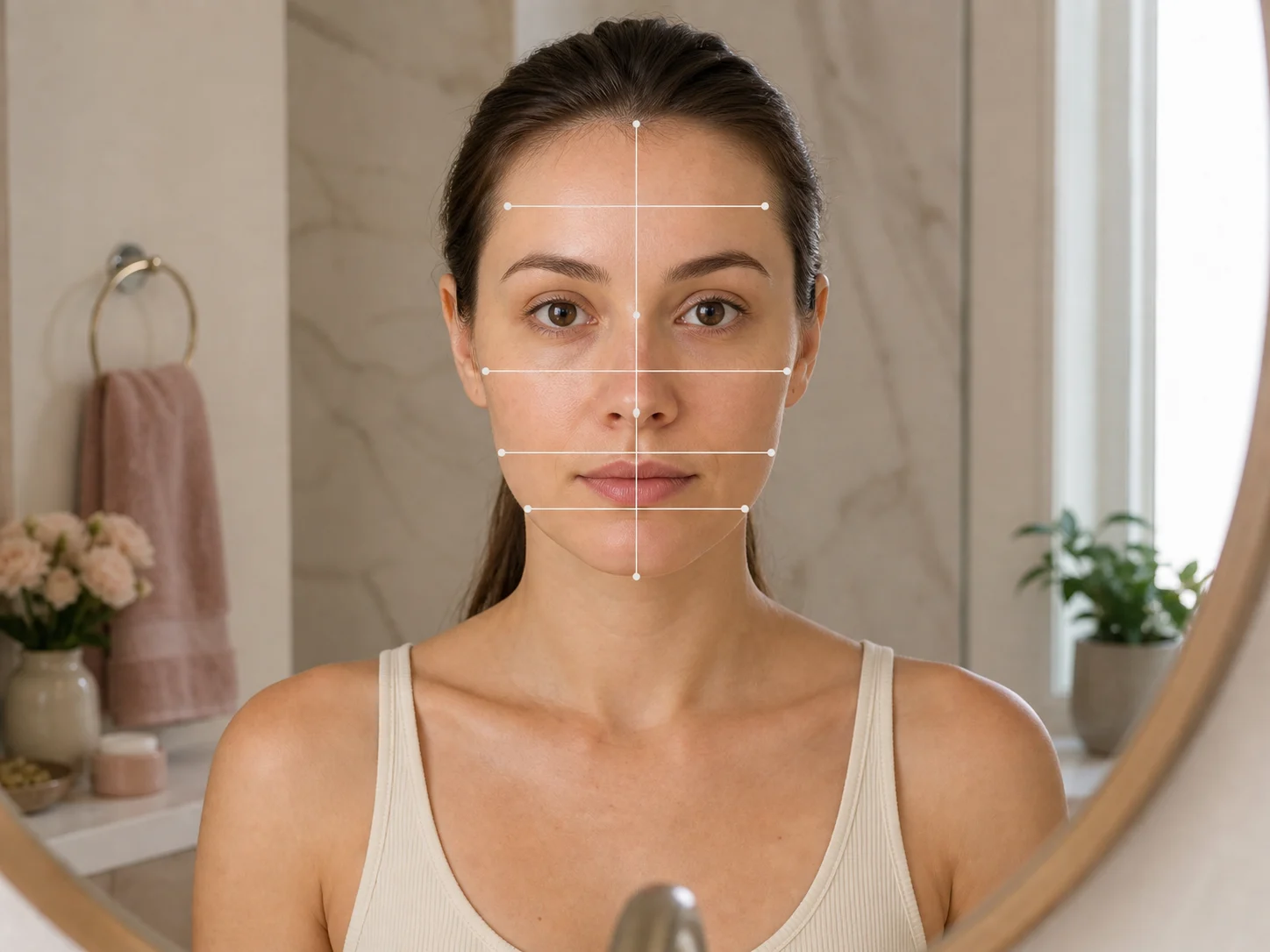
Outline controls
Use one unfiltered, front-facing reference photo as the baseline. Styling can remain part of the final look, but it should not hide the hairline, jaw corners, cheekbone landmarks, or chin used for classification.
Bangs can shorten the visible forehead, while curled or tucked layers can add width beside the cheeks or jaw. Tie hair back without pulling the skin, expose both temples, and keep enough space around the head to see the complete outline.
Contour and highlight can narrow the jaw, raise the cheekbone line, or taper the forehead in a photograph. Measure from an unfiltered image with even light first. Apply makeup preferences only after the underlying width relationships are recorded.
Beauty filters can change jaw width and chin length, while a close selfie enlarges the center of the face. Use the rear camera or step farther back when practical, keep the lens at eye level, and avoid portrait effects that reshape the outline.
Long vertical layers can hide cheek width and create a narrower, longer silhouette. If the uncovered measurements show face length close to cheekbone width with a curved jaw, round may remain the base pattern. Classify from the cleared outline, then evaluate the elongating effect as styling.
Context
The detector reads facial landmarks and proportions, not femininity or a styling preference. Hair, makeup, and frames matter only when they obscure checkpoints or change the visible outline.
The evidence remains anatomical: vertical distance, the spans across the upper face, cheeks, and lower face, plus the final chin contour.
After the category is stable, layers, volume, frames, and contour can be evaluated by how they redistribute visual height, width, and emphasis.
After identification
After the baseline is documented, test one styling variable at a time. A part, layer, frame, or contour placement may redistribute visual emphasis, but no recommendation is mandatory and none rewrites the measured outline.
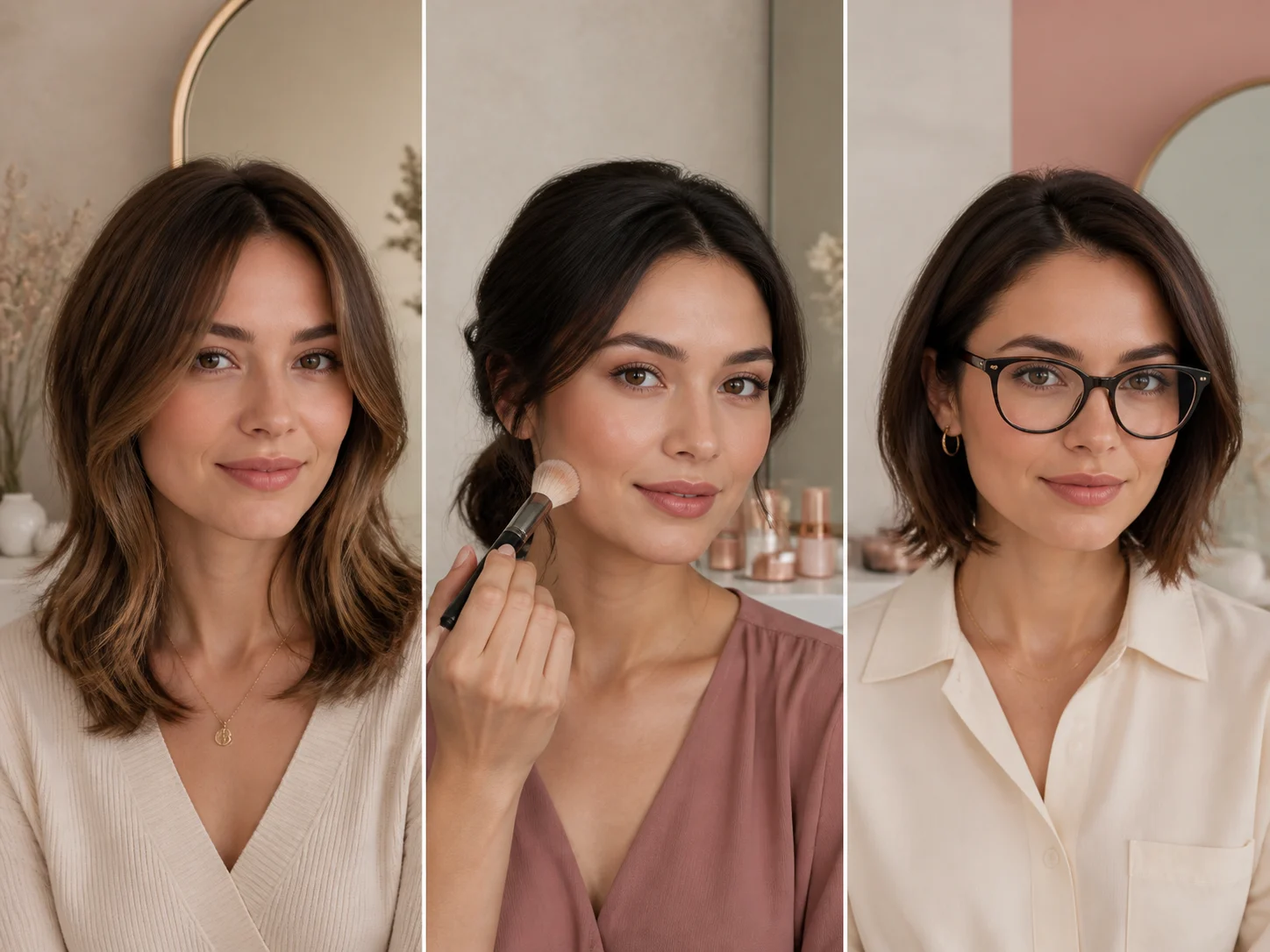
Length, layers, parting, and side volume can change how long, wide, soft, or angular the face reads.
Contour and highlight placement can emphasize cheekbones, soften edges, or balance upper and lower face width.
Glasses can add angles, soften corners, or balance a wider forehead, cheek line, or jaw.
Internal links
Choose the tool for an individual portrait, or open the overview when you need side-by-side definitions before narrowing the candidates.
FAQ
Practical answers about measurement, hair and makeup effects, category boundaries, and photo confirmation.
Ready to confirm it?
Take one eye-level portrait without filters or face-slimming effects, uncover the full outline, and compare the returned explanation with the baseline you recorded in this guide.